

Updates from the United Nations Office for Disarmament Affairs
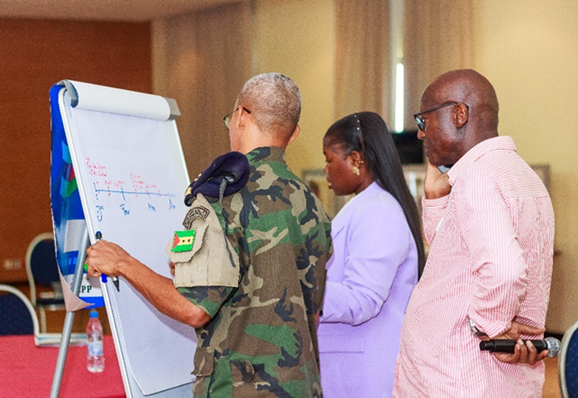
Participants engaging in group discussion to establish a national CBM reporting process during the National Awareness-Raising Workshop on Implementation of the BWC and United Nations Security Council Resolution 1540 (UNSCR 1540) in Sao Tome and Principe
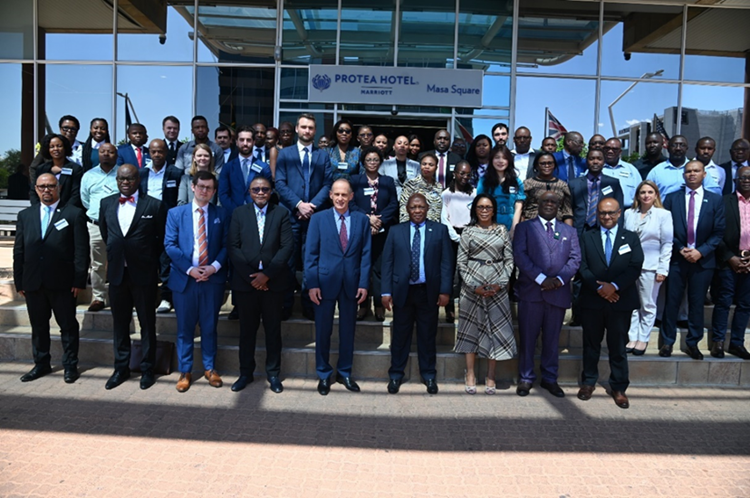
Sub-Regional Workshop on the Effective Implementation of the BWC in Southern Africa, held in Gaborone, Botswana, on 12-14 March 2024
The United Nations Office for Disarmament Affairs (UNODA), through its project to support the universalisation and effective implementation of the Biological Weapons Convention (BWC) in Africa, carried out within the framework of the Global Partnership (GP) Africa Signature Initiative, has continued to deliver tailored assistance to States to support their implementation of the Convention through a range of subregional and national activities.
From 12 to 14 March, UNODA held the last of a series of five subregional workshops on the universalisation and effective implementation of the Biological Weapons Convention (BWC) in Gaborone, Botswana. Sixty-five delegates from 10 Southern African States Parties (Angola, Botswana, Eswatini, Lesotho, Malawi, Mozambique, Namibia, South Africa, Zambia, and Zimbabwe), representatives of a number of international and regional organisations (UNODA, the World Organisation for Animal Health, and Africa Centres for Disease Control and Prevention) and representatives of members of the GP (the United States and Portugal) attended the workshop, which was organised in collaboration with the Government of Botswana.
As a result of the ongoing support delivered through the project by UNODA, there have been tangible improvements in national implementation of the BWC across the continent and a marked increase in national engagement with BWC processes. Members of the Global Partnership interested in contributing to or learning more about the work of the project to support the universalisation and effective implementation of the BWC in Africa are encouraged to contact the project team.
During the workshop, delegates discussed regional and national approaches to implementation of the BWC, shared relevant experiences, challenges and good practices and worked closely with UNODA staff to discuss synergies with existing avenues of technical assistance and capacity building support. In his opening remarks to workshop participants, the coordinator of UNODA’s project to support implementation of the BWC in Africa, Sylvain Fanielle, noted that “successful implementation of the Convention is greatly enhanced when professionals from diverse sectors of government come together to share experiences, discuss emerging trends and challenges and work collaboratively to identify needs and priorities”. Furthermore, he highlighted that was now, through the Global Partnership project, in a unique position to be able to provide tailor-made and comprehensive support to all African States interested in strengthening their implementation of the Biological Weapons Convention”.
The ten Southern African States Parties in attendance at the workshop pledged their commitment to work collaboratively to strengthen the implementation of the Convention in the region. This collective effort underscores the region’s proactivity in seeking to bolster the capacity of all African States to prevent the proliferation of biological weapons and to respond effectively to potential risks, in turn reinforcing regional solidarity.
UNODA, through the GP project, has also continued to provide support for the universalisation and effective implementation of the BWC at the national level. In fact, in an effort to promote comprehensive implementation of the BWC, two awareness-raising and Confidence-Building Measures (CBMs) workshops were conducted on 29 and 30 January and 20 and 21 February in Lusaka, Zambia and Bujumbura, Burundi, respectively. The workshops aimed to sensitise key national stakeholders about the importance of effective national implementation of the BWC and its significance in maintaining global and regional security. Participants were also trained on the processes and procedures required for the preparation and submission of CBMs, which, in turn, contribute to confidence and transparency among BWC States Parties. Both workshops were attended by a diverse array of stakeholders, including government officials, scientists, and civil society representatives and facilitated important discussions on the practical implications of the BWC and strategies for effective implementation. National sensitisation workshops serve as platforms for fostering awareness, collaboration, and commitment towards upholding the principles of the BWC as well as meeting State Party obligations arising thereunder.
UNODA has also continued to promote universalisation of the BWC through the provision of capacity building and outreach support to the remaining African States not party to the Convention. On 6 and 7 February, UNODA visited N’Djamena to promote Chad’s accession to the BWC. The visit brought together key national stakeholders and decision-makers involved in the accession process in order to raise awareness about the importance of BWC universalisation and to encourage broad national cooperation to that end. In opening remarks at a briefing of parliamentarians and senior government officials, UNODA Geneva Branch Chief of Service, Mélanie Régimbal, highlighted that “Chad’s accession to the Biological Weapons Convention would strengthen its commitment to the fight against weapons of mass destruction and would help to strengthen Chad’s national capacities in areas such as public health, veterinary medicine, agriculture, and emergency preparedness and response.” UNODA continues to work closely with its Chadian counterparts to provide ongoing support during the accession process.
Finally, from 4 to 6 March, UNODA held a National Awareness-Raising Workshop on Implementation of the BWC and United Nations Security Council Resolution 1540 (UNSCR 1540) in Sao Tome and Principe. The workshop brought together a diverse group of national stakeholders to raise awareness regarding the importance of comprehensive implementation of both the BWC and UNSCR 1540 and to highlight the intrinsic complementarity between the two instruments. The workshop served to strengthen delegates’ understanding of the various roles and responsibilities of national agencies and institutions in the implementation of both the BWC and UNSCR 1540.