



HPSA - Public Health Intelligence (PHI) Foundations training in Morocco
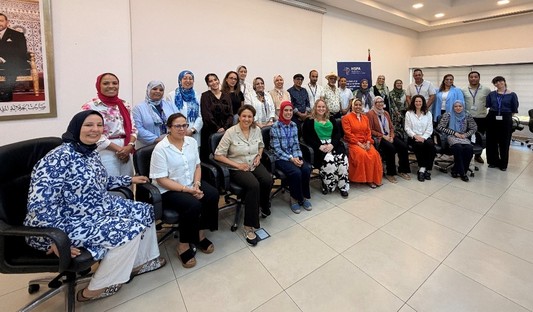
From July 20–24, the Robert Koch Institute (RKI) and Morocco’s Direction de l'Epidémiologie et de Lutte contre les Maladies (DELM), with support from WHO EMRO, hosted a Public Health Intelligence (PHI) Foundations training in Rabat, Morocco. Tailored to the local context using the jointly developed RKI-WHO PHI Competency Framework, the program convened multidisciplinary experts to enhance integrated surveillance and response capabilities using an all-hazards approach. Highlights included country insights from Tunisia (L'Observatoire national des Maladies Nouvelles et Émergentes, ONMNE) and Lebanon (The Ministry of Public Health), alongside practical AI applications presented by the European Centre for Disease Prevention and Control (ECDC) and WHO EMRO. This initiative was made possible with support from Global Affairs Canada’s Weapons Threat Reduction Program and the Government of the United Kingdom.

WOAH's Biothreat Reduction Activities in Africa
Regional
WOAH, in collaboration with INTERPOL and with technical support from the European Commission for the Control of Foot-and-Mouth Disease (EuFMD), organised two regional simulation exercises in July and August 2026 for the nine beneficiary countries of the Fortifying Institutional Resilience Against Biological Threats (FIRABioT) project. One exercise brought together representatives of Veterinary Services and Law Enforcement from English-speaking countries in Nairobi, Kenya, from 21–23 July, while the other was held for French-speaking countries in Antananarivo, Madagascar, from 4–6 August 2026. The exercises aimed to strengthen preparedness and response to agro-crime and agro-terrorism and enhance collaboration between Veterinary Services and Law Enforcement. Through a realistic scenario and interactive injects, participants worked through a simulated agro-terrorism incident, focusing on early detection, information sharing, communication, and coordination at national, regional and international levels. The exercises also strengthened participants’ understanding of each sector’s roles and responsibilities, as well as the roles of international organisations such as WOAH and INTERPOL. The lessons learned will support participating countries in further developing and implementing their national agro-crime roadmaps and strengthening their preparedness and response capacities.
Madagascar
From June to August 2026, WOAH, through the FIRABioT project, supported Madagascar in strengthening biological risk management in veterinary laboratories through a series of laboratory assessments, followed by drafting and validation workshops. Following assessments of four veterinary laboratories in Antananarivo, national experts were trained in biological risk assessment, including assessing measures to prevent the accidental and deliberate release of pathogens. From 6–10 July, experts worked together to revise the veterinary laboratory chapter of Madagascar’s existing National Manual on Security, Biosafety and Biosecurity for Laboratories. The revised draft was subsequently circulated to more than 100 national and international experts for technical feedback before being reviewed and updated by a national editorial team. From 17–19 August, a multisectoral validation workshop brought together representatives from veterinary laboratories, the Veterinary School, aquatic animal health, public health, environmental, and research sectors to review and validate the revised manual. Key outcomes included strengthened national capacity to conduct biological risk assessments, identification of practical measures to strengthen laboratory biosafety and biosecurity in veterinary laboratories, including emerging risks such as cyberbiosecurity threats, and the unanimous validation of the national manual, which will serve as a basis for developing laboratory-specific manuals in Madagascar.
Tanzania
The Emergency Risk Communication (ERC) Strategy for Veterinary Services (2026 – 2030), built around four pillars for 2026 to 2030 (preparedness and capacity, risk communication and media engagement, stakeholder engagement, and information management), was validated during a technical workshop held from 28 to 30 July 2026 in Dar es Salaam. The workshop was convened by the Directorate of Veterinary Services of the Ministry of Livestock and Fisheries, with support from the World Organisation for Animal Health (WOAH), under the FIRABioT project. Around 30 representatives from government ministries, academia, regulators, professional associations, law enforcement, and the private sector reviewed the draft strategy developed in Arusha in June 2026. Next steps include endorsement by the Permanent Secretary of the Ministry of Livestock and Fisheries for formal endorsement, followed by a national launch. Once adopted, it will strengthen Tanzania's capacity to respond to animal health emergencies and biological threats and to counter mis- and disinformation, while enhancing national and regional health security.
Malawi
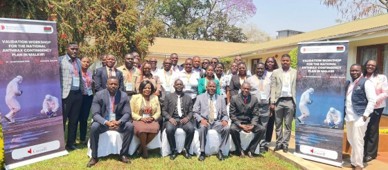
From 21 to 23 September 2026, the Department of Animal Health and Livestock Development of Malawi's Ministry of Agriculture, with support from the World Organisation for Animal Health (WOAH), convened a technical workshop in Lilongwe, Malawi, to validate the country's first National Anthrax Contingency Plan (NACP). The workshop brought together representatives from animal health, law enforcement, public health, wildlife, environment and disaster management to test and refine the draft plan developed during a drafting workshop held in Blantyre in August 2026. Implemented under the FIRABioT project, the validation combined a tabletop exercise with a clause-by-clause technical review of each chapter, clarifying institutional roles for outbreak activation, response and coordination under a health security approach, and restructuring the plan into a more operational document for field responders. The validated plan will now be submitted to the Principal Secretary Committee for formal endorsement, followed by an official launch. Once adopted, it will strengthen Malawi's capacity to prevent, detect, and respond to anthrax outbreaks and other biological threats.
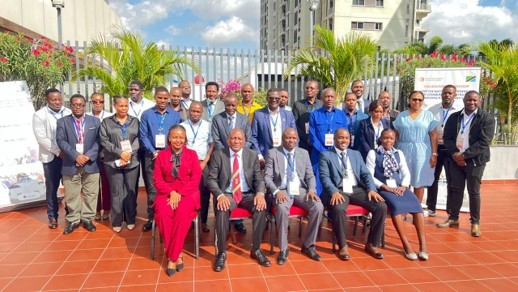
Participants' group photo for the validation workshop of the ERC Strategy for Tanzania’s Veterinary Services. Picture @ G. Omwega (woah) 2026.
Participants’ group photo for the validation of Malawi’s National Anthrax Contingency Plan. Picture @ G. Omwega (woah) 2026..
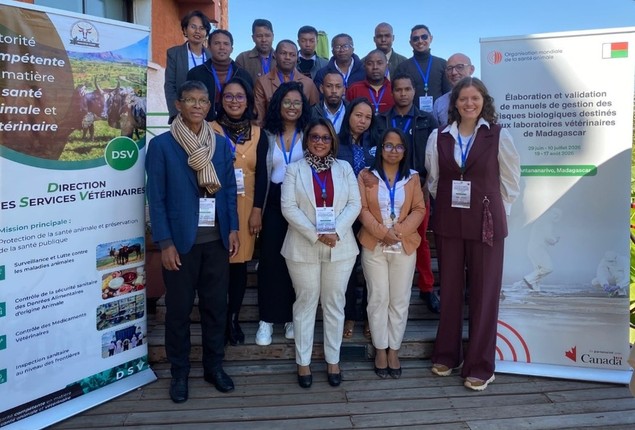
Group photo of participants and experts at the drafting workshop for Madagascar’s National Manual on Security, Biosafety and Biosecurity for Laboratories. Picture © E. Wijers, 2026.

Fellowships to participate at the Medical Biodefence Conference
Under Article X of the Biological Weapons Convention, States Parties “undertake to facilitate, and have the right to participate in, the fullest possible exchange of equipment, materials and scientific and technological information for the use of bacteriological (biological) agents and toxins for peaceful purposes”. In line with the above, the BWC Implementation Support Unit (ISU), in partnership with the Bundeswehr Institute of Microbiology (IMB) in Munich, Germany, is pleased to announce Fellowships to participate at the Medical Biodefence Conference (MBDC) from 7 – 9 April 2027 in Munich. The offer is also published on the BWC Article X database.
The MBDC, organized by the Bundeswehr Institute of Microbiology (IMB), is widely recognized as a leading international platform for addressing the global challenges posed by high-consequence pathogens - whether naturally occurring, accidental, or deliberate - as well as emerging risks associated with advances in the life sciences and biotechnology. The conference provides an interdisciplinary forum for scientific exchange on topics including medical countermeasures, novel technologies, high-consequence pathogens, risk assessment, bio-reconnaissance, outbreak investigation, and biodefence policy and strategy. It brings together leading experts from governments, military and civilian research institutions, universities, international organizations, and think tanks to share knowledge, discuss current challenges, and strengthen international cooperation.
The fellowship programme is funded by the German Federal Foreign Office and hosted by the IMB.
Selected fellows will receive:
The objectives include:
The fellowship aims to enable participants to:
Dates: 7–9 April 2027
Location: Bundeswehr Institute of Microbiology (IMB), Munich, Germany
Target Audience
Applications are invited from experts working in:
Only applicants from countries included on the DAC list of ODA recipients are eligible to apply.
Eligibility
Applicants should:
Applications will be evaluated by the MBDC Scientific Committee based on:
Applicants must register online for the training via the following link: https://disarmamenteducation.org/#/en/courses/144
UNODA supports Angola to Strengthen its national legislative framework for impleneting the Biological Weapons Convention.
On 23–24 September 2026, the United Nations Office for Disarmament Affairs (UNODA) and the Government of Angola convened a National Legal Awareness-Raising Forum on the Effective Implementation of the Biological Weapons Convention (BWC) in Luanda, bringing together senior decision-makers and technical representatives from across Angolan institutions.
The Forum was organized under the Project supporting the Universalization and Effective Implementation of the BWC in Africa, Southeast Asia and the Pacific, implemented by UNODA with support from the Global Partnership against the Spread of Weapons and Materials of Mass Destruction, in particular Canada, France, Italy, the Republic of Korea and the United Kingdom of Great Britain and Northern Ireland.
Angola joined the BWC in 2016 and has made sustained progress in strengthening its national implementation. Its experience has increasingly positioned it as a regional example, in particular among Portuguese-speaking States Parties. In October 2024, UNODA supported an initial national workshop in Angola focused on raising awareness of the Convention, strengthening the submission of confidence-building measures and supporting the development of a draft BWC implementing legislation. Following this event, Angola consolidated the draft BWC implementing law, and the Angolan National Authority for Arms Control and Disarmament (ANCAD) requested further UNODA assistance to support its adoption.
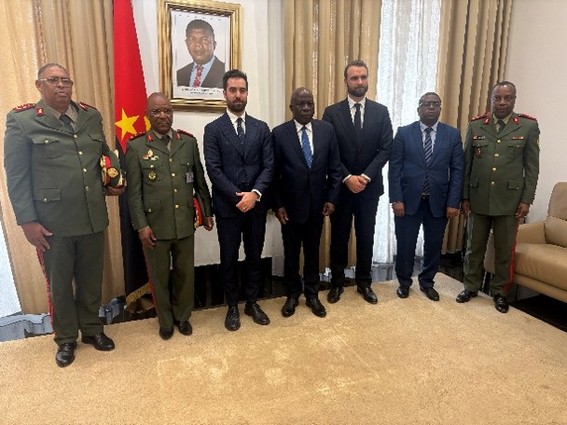
The National Legal Awareness-Raising Forum was designed to address both the political and technical dimensions of the legislative adoption process. On the first day, UNODA held bilateral meetings with senior representatives of the Ministry of Defence, Ministry of Foreign Affairs and Ministry of Justice, as well as with the Minister of State and Chief of the Military House of the President of the Republic and the President of the National Assembly. Discussions focused on the importance of adopting the draft legislation, Angola's leadership in BWC implementation and the remaining issues requiring attention before the law can be adopted and effectively implemented. The meetings confirmed strong political support for moving the legislation forward.
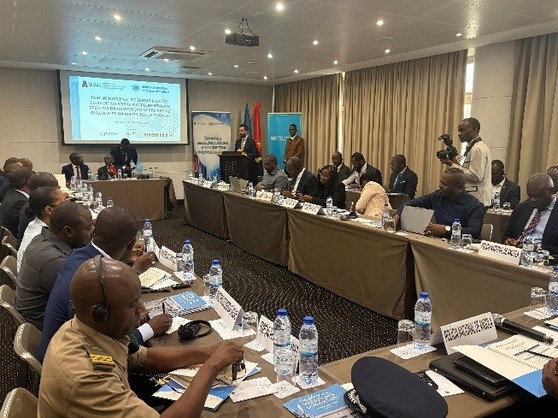
The second day brought together more than 45 representatives from 15 Angolan government entities for a technical workshop. UNODA presented approaches to developing legal and regulatory frameworks for BWC implementation, while ANCAD presented the latest version of the draft law. Participants examined remaining issues, discussed institutional responsibilities and identified regulations and administrative measures that will be needed to make the future legal framework fully operational.
The Forum demonstrated the importance of sustained national ownership and high-level political support in advancing BWC legal implementation. Angola's progress has been among the most sustained in Africa in recent years, and its National Authority for Arms Control and Disarmament provides a strong institutional model, combining political support, dedicated resources and mechanisms for inter-institutional cooperation.
The BWC prohibits the development, production, acquisition, transfer and stockpiling of biological and toxin weapons. Effective implementation requires States Parties not only to comply with these international obligations, but also to establish appropriate national laws, regulations and institutional arrangements. UNODA supports States in strengthening these national frameworks and translating their commitments under the Convention into practical measures.
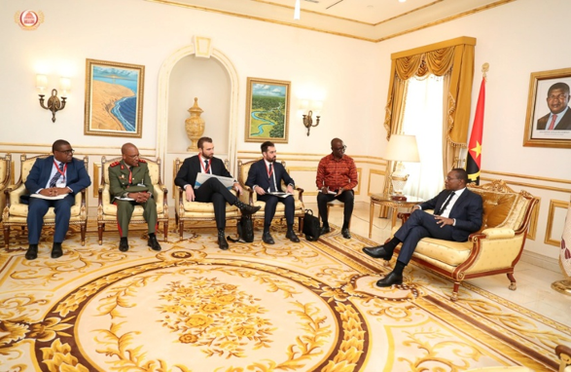
UNODA meets with H.E. Adão Francisco Correia de Almeida, President of the National Assembly of Angola.
Participants in the second day of UNODA’s National Legal Awareness-Raising Forum on the Effective Implementation of the BWC
UNODA meets with H.E. João Ernesto dos Santos, Minister of State and Head of the Military House of the President of the Republic of Angola


HSPA - Webinars
Upcoming Webinars:
Previous Topics:
National Institute for Public Health and the Environment (RIVM), Netherlands
The Biosecurity Office offers two e-learning courses specially developed for students, introducing the key principles of biosecurity and dual-use in the life sciences. Participants will learn why these topics are relevant to studies and future career, and how to handle the associated risks and responsibilities consciously.
A third course was developed for all staff (e.g. laboratory technicians, students, biosafety officers) working in laboratories dealing with biological materials, such as clinical, public health or research laboratories.
Op-Ed Series - Project Coast
A six-part series on the history of late-stage apartheid South Africa’s biological and chemical weapons program is currently being released by Daily Maverick: from the building and dismantling of late-stage apartheid South Africa's biological and chemical weapons program, the role of its leader Wouter Basson and the scientists, during regime change from F. W. de Klerk to Nelson Mandela; the concerted efforts made by the international community, the United States and UK Governments in particular, to prevent and contain the proliferation of materials and weapons of mass destruction.
Links:
ICGEB's BIO-GUARD programme builds biothreat response capacity in Africa
Rapid detection of a dangerous pathogen depends on trained scientists, reliable methods and laboratories that handle biological materials safely and securely. Over the past year, the BIO-GUARD programme of the International Centre for Genetic Engineering and Biotechnology (ICGEB) has worked on all three with African partners, through hands-on courses, research fellowships and the establishment of two national Biothreat Response Units.
BIO-GUARD is implemented and coordinated by ICGEB in cooperation with the Biological Weapons Convention Implementation Support Unit (BWC ISU) of the United Nations Office for Disarmament Affairs (UNODA), with support from the Governments of Italy, Norway and the United Kingdom. It contributes to the G7 Global Partnership's Signature Initiative to Mitigate Biological Threats in Africa (SIMBA) by strengthening laboratory capacity for the surveillance and detection of biological threats, together with biosafety and biosecurity practice through three linked instruments: courses, fellowships and national Biothreat Response Units. Since 2023 its network has grown to 127 scientists from 60 countries, 43 of them from 25 African countries.
Hands-on training in pathogen detection and biosecurity
Two courses on Pathogen Detection and Biosecurity were held over the past year, in Cape Town in December 2025 and in Trieste in May 2026. Together they trained 31 professionals from 28 countries, 11 of them from Africa. Participants worked hands-on with qPCR, LAMP and nanopore sequencing. Alongside the laboratory work, they studied the Biological Weapons Convention, dual-use research, biosafety and biosecurity, and public communication. Each course closed with a simulated outbreak in which participants had to turn a laboratory result into a recommendation for decision-makers. A third course, "Biotechnology Innovation and Biosecurity", will take place at the ICGEB component in New Delhi, India, from 12-16 October 2026.
Fellowships: applying new skills to national priorities
Fellowships lasting two to nine months give scientists time to develop and apply methods relevant to priorities in their home institutions. Since 2024, 35 ICGEB Fellowships for Scientists in Biosecurity have been awarded to scientists from 26 countries, including 15 fellows from Africa. The fellows come from public health laboratories, agricultural research institutes, environmental agencies, wildlife authorities and universities, the places where biological threats tend to surface first. They are hosted in ICGEB laboratories in Trieste, New Delhi and Cape Town and at the ICGEB Regional Research Centre in Taizhou, China. Their projects respond to priorities identified at home. They include extraction-free sample preparation for the colorimetric RT-LAMP detection of Ebola virus, genomic fingerprinting for the traceability of pathogens held in biorepositories, whole-genome sequencing of antimicrobial-resistant bacteria in wastewate, etc. These activities aim to simplify diagnostic workflows, strengthen the management of pathogen collections and support One Health surveillance, while building expertise that fellows can apply in their home laboratories. On 6 October 2026, the fellows hosted in Trieste met to present their projects and to discuss biosafety, biosecurity and the responsible conduct of research.
Biothreat Response Units in Zimbabwe and Kenya
Alongside courses and fellowships, BIO-GUARD supports institutional capacity through the ICGEB Grants for Strengthening Biosecurity in Healthcare and Research Laboratories. Supported by the Italian Ministry of Foreign Affairs and International Cooperation, the grants provide laboratories in low- and middle-income African countries with two years of funding to develop national Biothreat Response Units, together with access to ICGEB’s technology transfer facilities.
The units are designed to combine pathogen detection, One Health data integration and technical analysis to support the investigation of biological events. Their purpose is to provide national authorities with evidence for preparedness and response decisions. ICGEB supports their development through technology transfer, training, laboratory networking and technical backstopping, together with guidance on governance, biosafety and biosecurity. The first two grants were awarded in 2025, and work began in January 2026. In Zimbabwe, the National Microbiology Reference Laboratory is strengthening genomic surveillance and biobanking as part of the country's preparedness for future pandemics. In Kenya, the unit is building biosecurity capacity in healthcare diagnostic and research laboratories, where a pathogen is most often first identified. The aim in both countries is the same: capacity that becomes part of the national system.
Building lasting capacity
The ongoing outbreak of Ebola disease caused by Bundibugyo virus in the Democratic Republic of the Congo underscores the importance of having trained personnel, reliable diagnostic methods and safe, secure laboratory capacity in place before an emergency. By linking short courses, fellowships and institutional grants, BIO-GUARD helps skills acquired by individual scientists to become established practice in their laboratories and, in turn, part of national systems. For SIMBA and the wider Global Partnership community, this approach contributes to sustained capacity in Africa to detect, investigate and respond to biological threats of natural, accidental or deliberate origin.
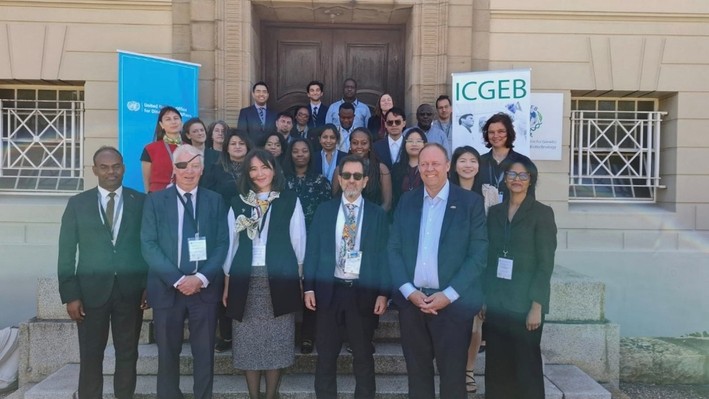
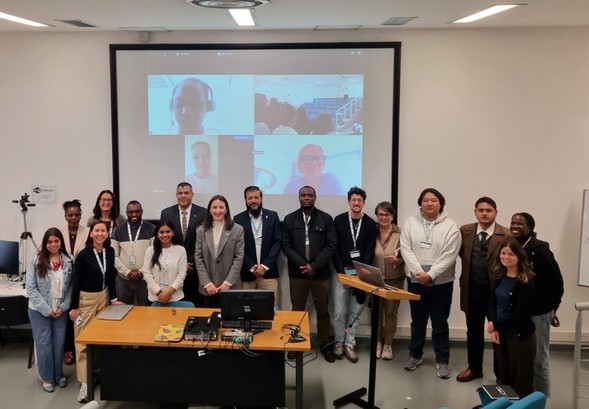
Participants of the "Pathogen Detection and Biosecurity" course at ICGEB Cape Town, December 2025
ICGEB biosecurity fellows at their welcome meeting in Trieste, 6 October 2026